Why Start Strength Training at Home as a Beginner?
Benefits of Home Strength Training for Beginners
Strength training at home is a great way for beginners to build muscle, improve health, and gain confidence. You can exercise anytime, save money on gym memberships, and enjoy privacy. Home workouts also help you develop the habit of regular exercise, which is key to long-term fitness success.
- Save time and money—no need for travel or expensive gyms.
- Start at your own pace in a comfortable environment.
- Reduce stress and boost your mood with regular activity.
- Increase strength, bone density, and overall fitness safely.
Common Myths and Misconceptions
- Myth: You need heavy weights to get strong.
Fact: Bodyweight exercises and light equipment are effective for beginners. - Myth: Home workouts are only for losing weight.
Fact: Strength training at home builds muscle and strength, not just burns calories. - Myth: It’s too difficult to stay motivated at home.
Fact: Simple routines and tracking progress can boost motivation.
Essential Equipment for a Beginner Strength Training Routine at Home
Minimal & No-Equipment Options
You can start strength training at home with just your own body weight. Many effective exercises require no equipment at all, making it easy for anyone to begin.
- Bodyweight exercises: push-ups, squats, lunges, planks
- Sturdy chairs or steps for elevated exercises
- Towels for floor movements
Affordable Home Strength Tools (Dumbbells, Resistance Bands, etc.)
If you want more variety, consider these budget-friendly strength tools:
- Resistance bands for added challenge and versatility
- Light to medium dumbbells (start with 2-5kg)
- Backpack filled with books as a homemade weight
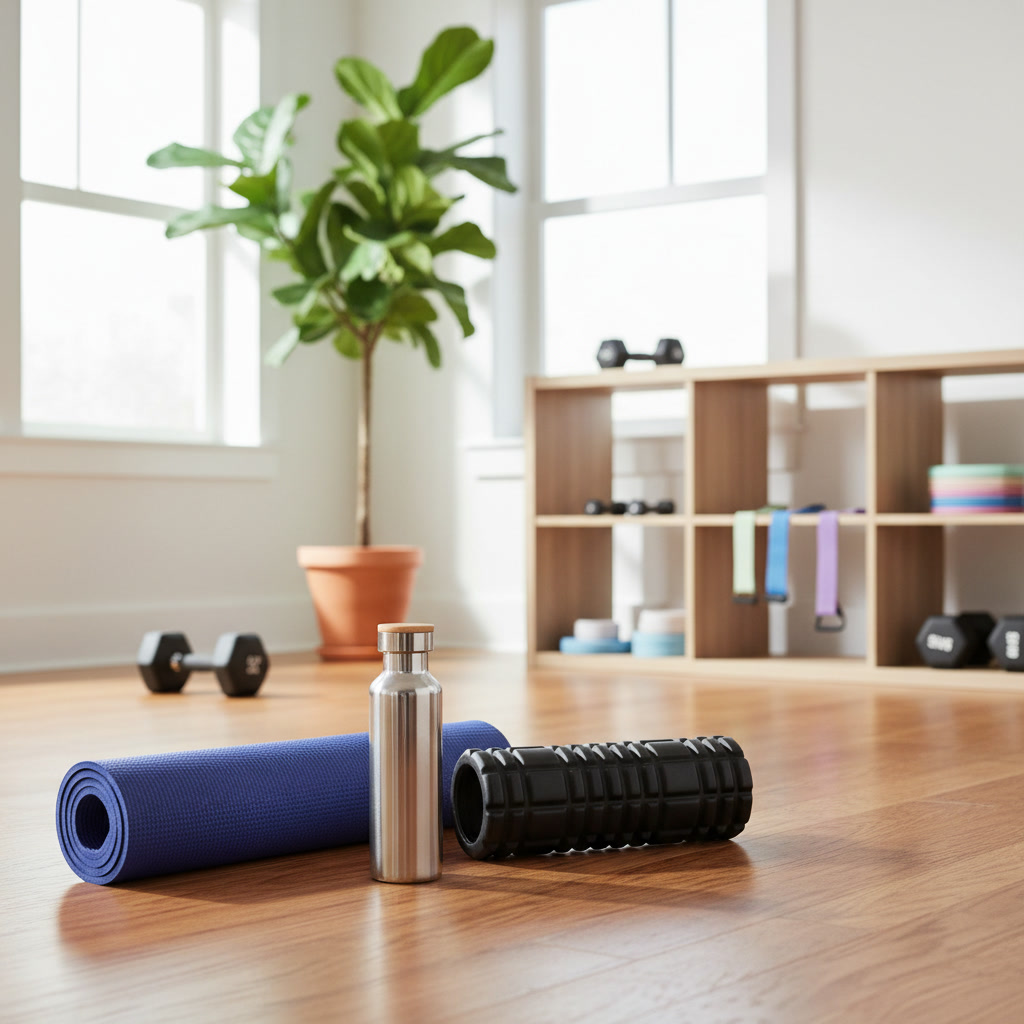
Setting Up Your Home Workout Space
- Pick a clear area where you have enough room to move (about 2×2 meters).
- Use a non-slip mat to protect your floor and joints.
- Keep equipment organized and easy to reach.
- Place a water bottle and towel nearby.
- Optional: Play your favorite music or use a timer app for motivation.
Key Principles of an Effective Beginner Strength Training Routine at Home
Understanding Reps, Sets, and Rest
“Rep” stands for repetition—one complete movement of an exercise. A “set” is a group of reps. For beginners:
- Aim for 8–12 repetitions (reps) in each set.
- Do 2–3 sets per exercise.
- Rest for 30–60 seconds between sets to recover.
Importance of Warming Up and Cooling Down
Warming up prepares your body for exercise and reduces the risk of injury. Cooling down helps your muscles recover.
- Warm Up (5–7 minutes): March or jog in place, do arm circles, and gentle dynamic stretches.
- Cool Down (5 minutes): Stretch major muscle groups to prevent soreness.
The Complete Beginner Strength Training Routine at Home
Full-Body Routine Structure (Sample Schedule)
| Day | Focus |
|---|---|
| Monday | Full-body strength |
| Tuesday | Active rest (stretching or walking) |
| Wednesday | Full-body strength |
| Thursday | Active rest |
| Friday | Full-body strength |
| Saturday/Sunday | Rest or light activity |
Step-by-Step Guide to Core Bodyweight Exercises
- Push-Ups Variations
- Wall Push-Up: Stand arms-length from a wall. Place hands on wall and bend elbows, bringing chest toward wall. Push back. Do 8–12 reps.
- Knee Push-Up: Kneel on floor, hands under shoulders. Lower chest to floor, then push up. 8–12 reps.
- Standard Push-Up: Hands on floor, toes on ground, body in a straight line. Lower body and push up. 8–12 reps.
- Squats and Lunges
- Squat: Stand with feet hip-width apart. Bend knees, push hips back like sitting, keep back straight. Stand up. 10–15 reps.
- Reverse Lunge: Stand tall, step backward with one leg, lower knee toward floor, push back to stand. Alternate legs, 8–12 reps per leg.
- Planks and Core Work
- Forearm Plank: Elbows under shoulders, body straight, hold for 20–30 seconds. Build up to 1 minute.
- Dead Bug: Lie on back, arms up, knees bent. Lower opposite arm and leg, then switch. 10 reps per side.
- Glute Bridge: Lie on back, feet flat, knees bent. Lift hips, squeeze glutes, lower down. 12–15 reps.
How to Incorporate Resistance Bands or Dumbbells
- Add a resistance band around your thighs for squats and glute bridges.
- Hold dumbbells during squats, lunges, or while doing shoulder presses.
- Choose a weight that feels challenging for the last 2 reps of each set.
- Keep good form—only increase weight when ready.
Progression: How to Advance Your Home Strength Training Routine
Signs You’re Ready to Increase Intensity
- You can complete all sets and reps comfortably
- You feel less challenged after several workouts
- Recovery is quicker and you have good energy
Adding Variety and Challenge
- Increase reps or sets.
- Try more advanced push-up or plank variations.
- Add heavier weights or use thicker resistance bands.
- Shorten rest between sets for extra challenge.
- Join online challenges or group workouts for motivation.
Common Mistakes Beginners Make in At-Home Strength Training
- Skipping warm-up or cool-down
- Using improper form (rushing movements or arching back)
- Doing too much too soon (risking injury)
- Not tracking progress (missing out on motivation)
- Not resting enough between sessions
Safety Tips and How to Avoid Injuries at Home
- Always warm up before and cool down after workouts.
- Use slow, controlled movements with proper form.
- Start with less weight or easier options until comfortable.
- Keep your workout area clutter-free and well-lit.
- Listen to your body—rest if you feel pain (not just muscle effort).
- Drink water and take breaks as needed.
Frequently Asked Questions: Beginner Strength Training at Home
- How often should I train?
Aim for 2–3 full-body sessions per week with rest between. - What should I eat to support my training?
Eat a balanced diet with protein, whole grains, fruits, and veggies; drink plenty of water. - Do I need supplements?
Most beginners don’t need supplements if eating well. - How can I stay motivated?
Track your progress, set specific goals, and join online fitness groups.
Resources: Free Apps, Videos, and Communities for At-Home Strength Training in 2026
- Fitness apps with beginner routines (search for “home strength training 2026”)
- YouTube channels offering guided strength training workouts
- Online fitness forums and communities to ask questions and share progress
- Downloadable progress trackers and workout planners
Summary: Key Points and Next Steps
- Strength training at home is beginner-friendly, cost-effective, and flexible.
- Start with simple exercises and basic equipment or bodyweight only.
- Warm up, use good form, and progress at your own pace.
- Aim for consistency, track progress, and stay motivated with online support.
- Set achievable goals, celebrate progress, and consider new challenges as you get stronger.
Take your first step today—choose a few exercises, set a schedule, and gradually build your confidence and strength. Enjoy your at-home strength training journey!