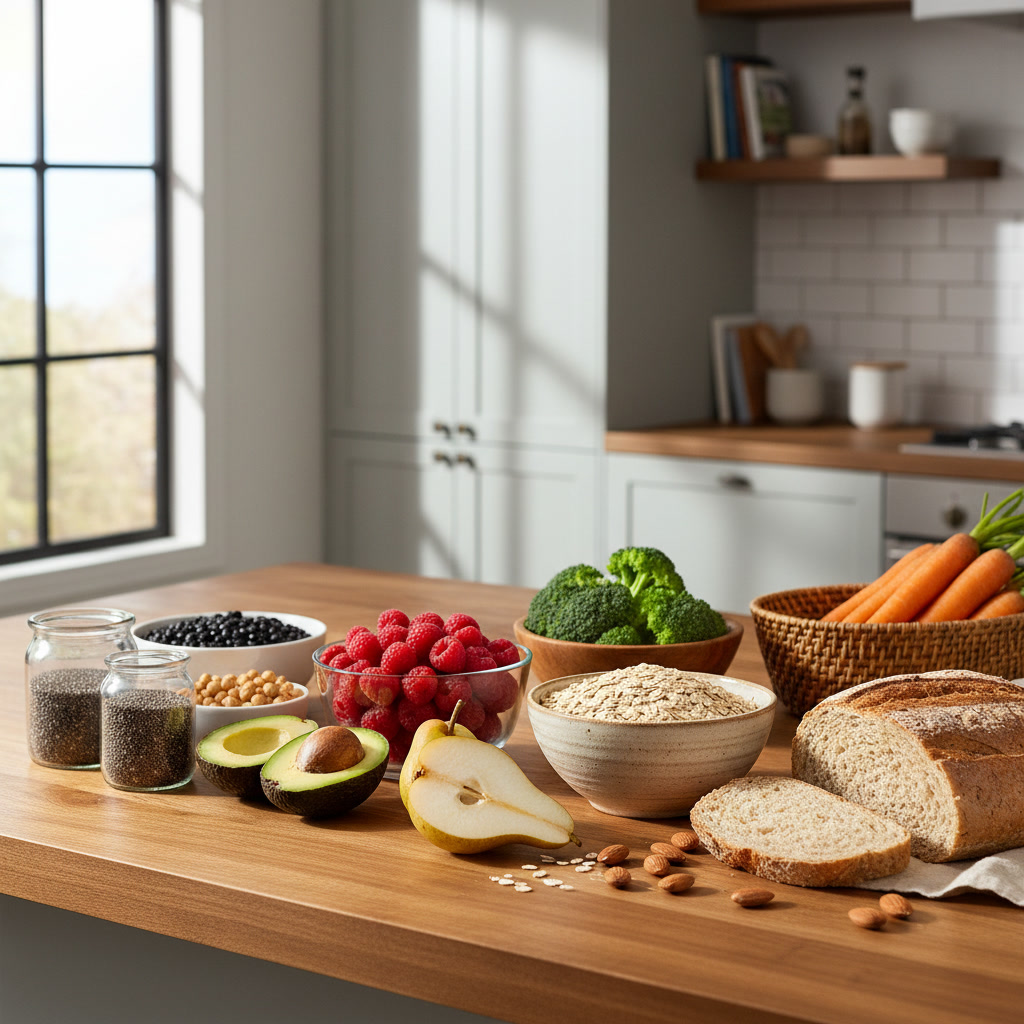
What Are High-Fiber Foods and Why Do They Matter?
The Science of Dietary Fiber
Dietary fiber is a part of plant foods that your body can’t digest. It includes two types: soluble fiber, which dissolves in water, and insoluble fiber, which does not. Both types help keep your digestive system healthy.
Key Health Benefits of High-Fiber Foods
High-fiber foods support regular bowel movements, help lower cholesterol levels, stabilize blood sugar, and can help you feel full longer. Fiber is also linked to lower risks of some chronic diseases.
Recommended Daily Fiber Intake in 2026
Experts recommend teens and adults aim for about 25-30 grams of fiber each day. This ensures your body benefits from fiber’s digestive and wellness effects.
High-Fiber Foods to Add to Your Diet Now
Fruits Packed With Fiber
- Apples
- Pears
- Bananas
- Berries (raspberries, blackberries)
- Oranges
Fiber-Rich Vegetables for Every Meal
- Carrots
- Broccoli
- Spinach
- Sweet potatoes
- Cauliflower
Whole Grains and Legumes Loaded With Fiber
- Brown rice
- Quinoa
- Oats
- Whole wheat bread
- Lentils
- Beans (kidney, black, pinto)
- Chickpeas
Surprising High-Fiber Foods You Might Be Missing
- Popcorn (air-popped)
- Avocado
- Almonds
- Chia seeds
- Dark chocolate (in moderation)
Step-by-Step Guide: How to Incorporate High-Fiber Foods Into Your Routine
Easy Breakfast Ideas for a Fiber Boost
- Start your morning with oatmeal topped with berries and chia seeds.
- Make a smoothie using spinach, banana, and flaxseed.
- Eat whole grain toast with avocado.
High-Fiber Snacks and Quick Fixes
- Pack apple slices or raw carrots for school or work.
- Enjoy popcorn instead of chips.
- Nosh on a handful of almonds or walnuts.
Building Balanced, Fiber-Filled Lunches and Dinners
- Prepare salads that include beans, broccoli, and mixed greens.
- Replace white rice with brown rice or quinoa.
- Add lentils or chickpeas to soups and stews.
Tips and Tricks to Increase Fiber Intake Without Digestive Discomfort
Gradually Adjusting Your Diet
Increase your fiber intake slowly so your body can adapt. Adding too much fiber at once may cause gas or bloating.
The Importance of Hydration With Fiber
Drink plenty of water. Fiber absorbs water in your body, so staying hydrated helps prevent discomfort.
Tracking Progress and Listening to Your Body
Keep a food diary to monitor how much fiber you’re eating. Notice how your body responds, and adjust if needed.
Sample High-Fiber Meal Plan for a Week (2026 Edition)
Day-by-Day Meal Suggestions
| Day | Breakfast | Lunch | Dinner | Snack |
|---|---|---|---|---|
| Monday | Oatmeal with banana | Quinoa salad with chickpeas | Lentil soup with whole wheat bread | Carrot sticks |
| Tuesday | Whole grain toast with avocado | Bean burrito with spinach | Baked sweet potato and broccoli | Berries |
| Wednesday | Berry smoothie with flaxseed | Mixed greens salad with kidney beans | Brown rice stir-fry with vegetables | Popcorn |
| Thursday | Yogurt parfait with berries | Lentil soup and whole wheat crackers | Chickpea curry with cauliflower | Apple slices |
| Friday | Oatmeal with almonds | Vegetable wrap with hummus | Black bean tacos with salsa | Dark chocolate |
| Saturday | Whole grain pancakes with berries | Spinach and lentil salad | Vegetable stew with brown rice | Chia pudding |
| Sunday | Smoothie bowl with fruit and seeds | Barley soup with mixed veggies | Baked potato with beans | Almonds |
Grocery List for High-Fiber Foods
- Oats
- Bananas
- Berries
- Spinach
- Avocado
- Whole grain bread and pancakes
- Brown rice
- Quinoa
- Lentils
- Beans (variety)
- Chickpeas
- Carrots
- Broccoli
- Cauliflower
- Sweet potatoes
- Chia seeds
- Flaxseed
- Almonds
- Dark chocolate (in moderation)
- Whole wheat crackers
- Popcorn kernels
Common Myths About High-Fiber Diets—Debunked in 2026
- Myth: High-fiber diets are boring.
Fact: There are many tasty, colorful foods with lots of fiber! - Myth: Fiber is only found in vegetables.
Fact: Fiber is found in fruits, grains, nuts, seeds, and legumes too. - Myth: Eating fiber always causes stomach problems.
Fact: Gradually increasing fiber and drinking water reduces discomfort.
Frequently Asked Questions: High-Fiber Foods to Add to Your Diet
- Q: Can I get all my daily fiber from a supplement?
A: Whole foods give more benefits than supplements. Eat a variety of plant foods. - Q: How quickly will I feel better after increasing fiber?
A: Changes may be felt in a few days to weeks. Everyone is different. - Q: Can high-fiber foods help with weight management?
A: Yes. Fiber helps you feel full and can support healthy weight goals. - Q: Is fiber just for digestion?
A: No. Fiber also helps heart health, blood sugar, and overall wellness.
Adding more high-fiber foods is a smart choice for your health. Start with small changes, listen to your body, and enjoy a variety of delicious foods that are packed with fiber. Taking care of your diet today sets you up for lifelong wellness!