Why Decluttering Kids’ Toys Matters for Families
The Impact of Toy Clutter on Kids and Parents
Toy clutter can create stress for both parents and children. Too many toys make it hard for kids to focus during playtime. It can also lead to frustration when toys are hard to find or broken. For parents, cluttered spaces make cleaning and organizing difficult. Research shows a messy environment can increase anxiety and reduce a family’s overall happiness.
Common Signs It’s Time to Declutter Toys
- Toys are overflowing from bins, baskets, or shelves.
- Your child no longer plays with certain toys.
- Many toys are broken or missing pieces.
- Playtime causes arguments or frustration.
- Your child struggles to clean up after themselves.
Preparing to Declutter Kids’ Toys Without Stress
Shifting Your Mindset: Decluttering as a Positive Experience
Think of decluttering as a way to bring joy and calmness to your home. Removing unused toys makes space for what matters most. Encourage yourself and your family to focus on the benefits, like easier cleaning and happier playtimes.
Talking to Kids About Decluttering Their Toys
- Explain why you are decluttering—use simple language.
- Let your child know they can help make decisions.
- Discuss the idea of sharing toys with other kids who might need them.
- Address their feelings. Listen to their worries or excitement.
Gathering Supplies for a Smooth Decluttering Session
- Large boxes or bins for sorting (labeled Keep, Donate, Discard).
- Trash bags for broken or unsalvageable toys.
- Cleaning supplies (wipes or sprays) to freshen up toys you keep.
- Notepad or sticky notes to track decisions.
- Snack and drink for you and your child—keep the mood positive.
The Stress-Free Decluttering Process: Step-By-Step
Sorting Toys Into Keep, Donate, and Discard Piles
- Gather all toys from around the house into one space.
- Pick up one toy at a time and decide:
- Keep: Toys your child loves and uses often.
- Donate: Gently used toys your child has outgrown.
- Discard: Broken toys or those missing important pieces.
- Place each toy in the appropriate box or bag as you go.
- Take breaks if needed. Decluttering can feel tiring.
How to Involve Kids by Age Group
| Age Group | Best Approach |
|---|---|
| Preschool (3-5 years) | Let them choose a set number of favorites to keep. Offer simple choices. |
| Elementary (6-10 years) | Discuss why decluttering matters. Encourage them to help sort and make decisions. |
| Tweens (11+ years) | Give them more control over the process. Let them lead, and support their decisions. |
Dealing with Sentimental Toys
- Ask yourself and your child why the toy is meaningful.
- Limit the number of sentimental toys kept—store in a special box.
- Take photos of toys you want to remember but don’t need to keep physically.
- Consider sharing sentimental items with close family or friends.
Smart Strategies to Keep Toy Clutter Under Control
Creating Effective Toy Storage Solutions
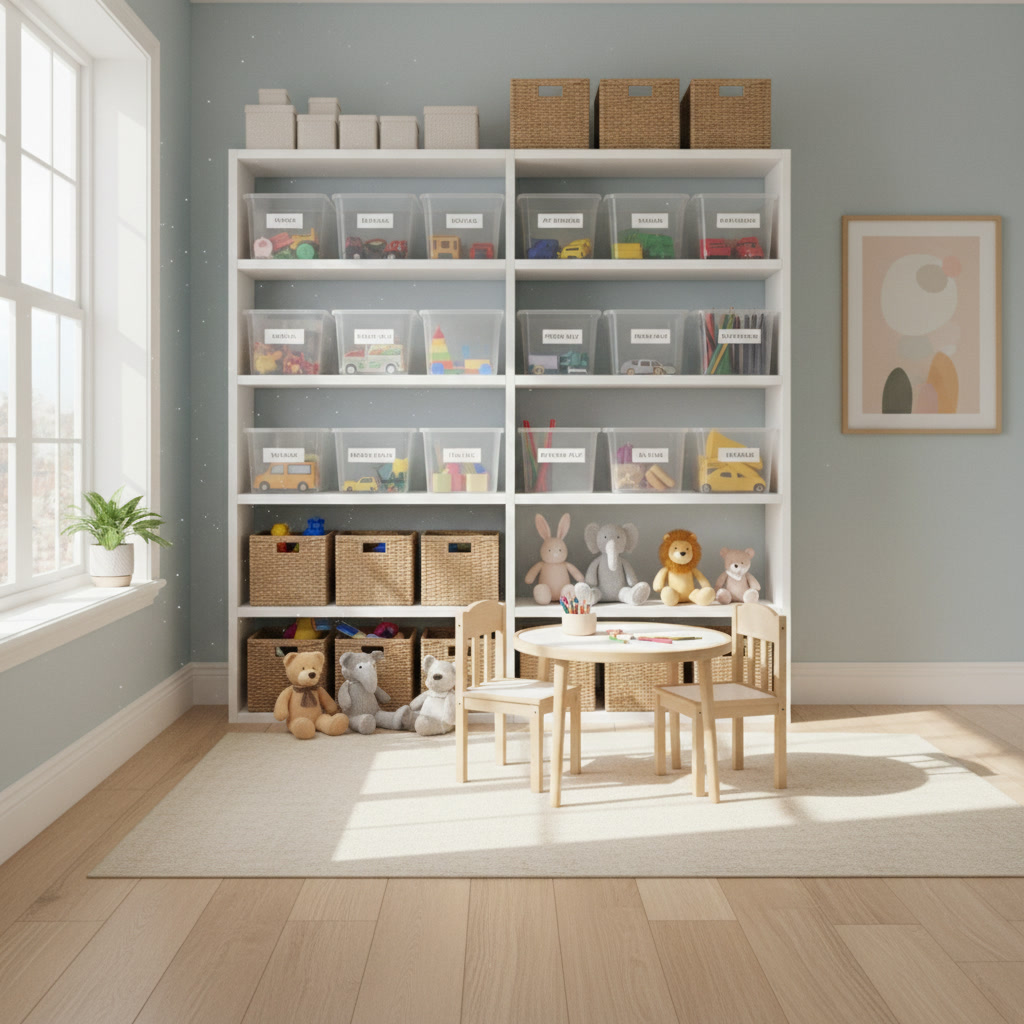
- Use clear bins or baskets so toys are easy to see and access.
- Label containers with words or pictures, especially for younger children.
- Place storage at child-friendly heights to encourage independence.
Rotating Toys for Less Overwhelm and More Play
- Choose a small number of toys to keep out at one time.
- Store the rest in a separate box or closet.
- Every few weeks, swap out the toys for a fresh play experience.
- This keeps playtime exciting and prevents boredom.
Setting Family Rules for Future Toy Accumulation
- For each new toy brought in, let one toy go (“one-in, one-out” rule).
- Discuss gift guidelines with family and friends—experiences over more toys.
- Make regular decluttering a family habit—schedule sessions two to four times a year.
Frequently Asked Questions About Decluttering Kids’ Toys
- How do I deal with my child resisting toy decluttering?
- Listen, validate feelings, and involve them in decision making. Go slow.
- What if my child wants to keep everything?
- Set limits on the number of toys or allocate a specific space for keepsakes.
- When is the best time to declutter?
- Before birthdays or holidays, or when you notice growing clutter.
- Can toddlers understand decluttering?
- Yes, with guidance. Use simple words and let them choose a few favorites.
Resources for Stress-Free Decluttering
Recommended Tools and Products
- Sturdy storage bins with lids
- Label maker or printable labels
- Donation bags or boxes
- Picture books about organizing (for younger kids)
Further Reading and Support Groups
- Books: “Simplicity Parenting” by Kim John Payne, “The Life-Changing Magic of Tidying Up” by Marie Kondo
- Online forums: Parenting Groups, Decluttering Clubs, Local community groups for toy swaps
- Websites: Minimalist parenting blogs, Educational sites about child development and home organization
Summary of Key Points and Next Steps: Decluttering kids’ toys can feel overwhelming, but it is possible without stress. Start with a positive attitude, involve your children, and break the job into clear steps. Focus on keeping only the most loved and used toys, and create storage solutions that support lasting change. Use the “one-in, one-out” rule and plan regular decluttering sessions to stay organized. Remember, the goal is less stress, more fun, and a happier home for everyone.